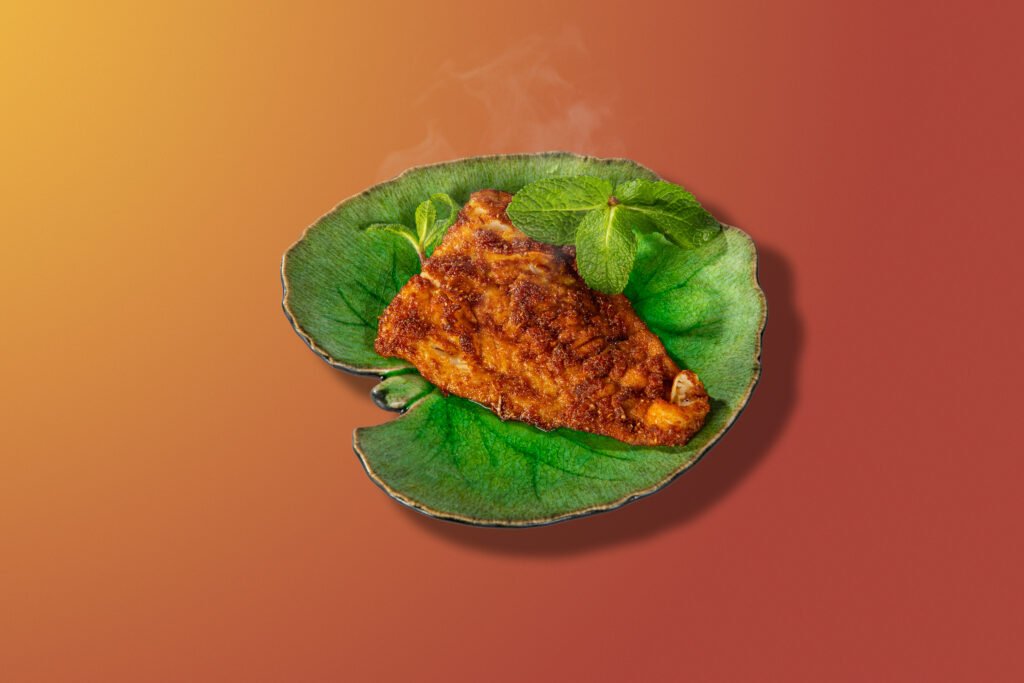
In Lahore they fry fish on street corners in pans the size of bin lids, and the queue tells you everything. This is that fish, sized for a home kitchen. Score it, coat it in Roosma Fish Masala, give it twenty minutes to think, and fry. The marinade crisps into a golden lacquer while the inside stays soft and steaming. Three ingredients, one of which is the fish.
Ingredients
- 500-600g fish fillets (cod, haddock, or tilapia work brilliantly)
- 1 packet Roosma Fish Masala blend
- Oil for frying (enough for the fish to float freely)
Worth knowing what’s in that packet, because it’s not curry powder. The blend is led by carom seed, ajwain, the sharp little seed that South Asian cooks have always paired with fish. Behind it sit garlic, chilli, cumin, ginger and coriander, and then the quiet hero: cornflour, ground right into the mix. That’s your crust. Homemade marinades need a separate flour dredge. This one carries its own. There’s salt in there too, measured for the whole fillet, so don’t add any yourself. The packet is the seasoning.
Method
- Pat the fish completely dry with kitchen paper. Dry fish crisps, wet fish steams.
- Score the fillets with a knife. This helps the spices get deeper in and gives the crust more edges to form on.
- Coat the fish generously with the Roosma Fish Masala blend, pressing it in on all sides.
- Leave it to marinate for at least 20 minutes, the longer the better.
- Heat enough oil in a pan for the fish to float freely. You want it hot but not smoking, a pinch of the blend dropped in should fizz straight away.
- Lower the fish in carefully and then leave it alone. Fry until golden and crispy, turning once.
- Drain on kitchen paper straight away, so it stays crispy rather than greasy. Serve immediately with lemon wedges, fresh salad, or rice.
Which fish should you use?
Firm white fish, and the supermarket basics are genuinely the right answer: cod, haddock, tilapia, basa. Look for fillets around 1.5-2cm thick, chunky enough to stay juicy while the outside crisps. Skip salmon, its own oils fight the spices, and skip the delicate flat fish like sole, which fall apart before the crust forms. Frozen fillets work fine with one condition: thaw them fully and dry them like you mean it, because frozen fish carries a lot of water and water is the enemy of crispy.
How to fry fish without it sticking
This is the part that puts people off frying fish, and it comes down to three rules. Dry fish, we’ve covered. Hot pan, get the oil properly up to temperature before anything goes in, because fish laid into lukewarm oil glues itself to the metal. And the big one: once the fish is in, don’t touch it. No prodding, no peeking, no early flip. Fish releases itself from the pan when the crust has formed, usually around the three minute mark. If it resists when you nudge it, it’s not ready, give it another minute. One confident flip, same again on the other side, out.
Oven and air fryer
You lose a bit of the lacquer without the oil bath, but both work well. Oven: 200°C fan on a lined tray, a brush of oil over the coated fish, 12-15 minutes depending on thickness. Air fryer: 190°C for 10-12 minutes, sprayed with oil, no need to turn. The crust comes out more baked than shattering, still deeply savoury, and it’s the lighter way to do a weeknight version.
Serving and storage
Lemon is not optional. The sharpness against the carom and chilli is half the dish. Beyond that: fresh salad and naan, a pile of rice, or go fully British and put it next to chips, where it will embarrass every chippy within a mile.
Fried fish is at its best within the hour, so this is a cook-and-eat dish rather than a meal-prep one. Leftovers keep 2 days in the fridge and come back respectably in a hot oven for 5-6 minutes. Don’t microwave it, and don’t freeze it once fried, the crust never forgives you.
← Back to all recipes
All Roosma recipes →